

The details of COMBINED landscapes can be found below:
Climate and nature in grasslands (WP1)
Main Objectives
The work on grasslands (Work package 1) of the COMBINED project aims to restore biodiversity and make grasslands used in the dairy sector resilient to climate extremes. These grasslands cover about a third of the Dutch land area and half of all Dutch agricultural land. If we manage these grasslands better, we can achieve enormous gains in climate resilience of our food production and nature restoration in the agricultural landscape. Specifically, we focus on improving resilience to summer drought, a factor that is especially important for grasslands on sandy soil.
In COMBINED, we investigate how herb-rich grassland can work as 'multifunctional grassland', optimising multiple functions at the same time. We focus on the various functions of herb-rich grassland in Dutch dairy farming, including crop yield, soil health, carbon storage and above-ground and subsurface biodiversity. We investigate these functions in the field and link them to knowledge about how multifunctional grassland can fit into the business operations of Dutch dairy farms, by including what dairy farmers encounter when they use herb-rich grassland. Below we present the three sub-projects of work package 1.
With an enthusiastic team of 9 researchers and social partners, we hope to be able to make a valuable and practical contribution to the biodiversity and climate resilience of Dutch grasslands, in a way that is good for nature and attractive and feasible for the dairy farmer.
Team
Team leads: Merel Soons and Hens Runhaar, Utrecht University
Researchers: Noa Tabak, Tessel de Vries, Emma Windey, Yann Hautier, Tina Venema, Merel Soons, Hens Runhaar (Utrecht University), Stefan Dekker (NIOO), Agnes van den Pol van Dasselaar (AERES)
Social partners: Ministry of LVVN, Province of Utrecht, Province of Gelderland, BIJ12, Netherlands Environmental Assessment Agency, LTO, BoerenNatuur, FrieslandCampina, Natuurmonumenten, Staatsbosbeheer, Twickel Estate, Urgenda.
Subproject 1: plant-soil interactions and multifuncionality
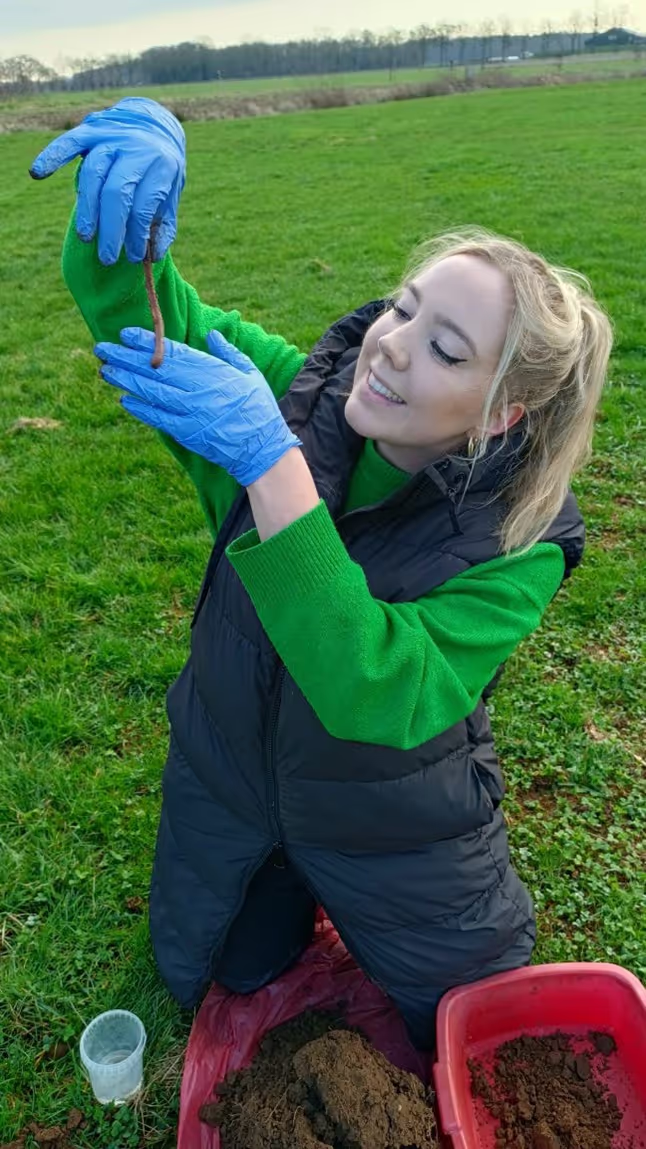
My name is Noa Tabak, and I am responsible for WP1.1. I do research on plant-soil interaction in grasslands. What happens in the soil is (literally) invisible to many people, but it is still super important for healthy grass production. I look at how the soil functions in different management styles. For example, we investigate the nutrients, soil life, soil structure and carbon storage and quality in grasslands with different management styles. I also look at the effect of drought on soil-plant interaction in grasslands. We hear from many farmers that herb-rich grasslands are better able to withstand drought. But what about that exactly? Which mechanisms in the soil are responsible for this? We are trying to find out. My favorite moments during work are when we are in the fields with the cows, or when we sit at the kitchen table at the farmer's and talk about anything and everything.
Subproject 2: above-ground biodiversity and nature restoration
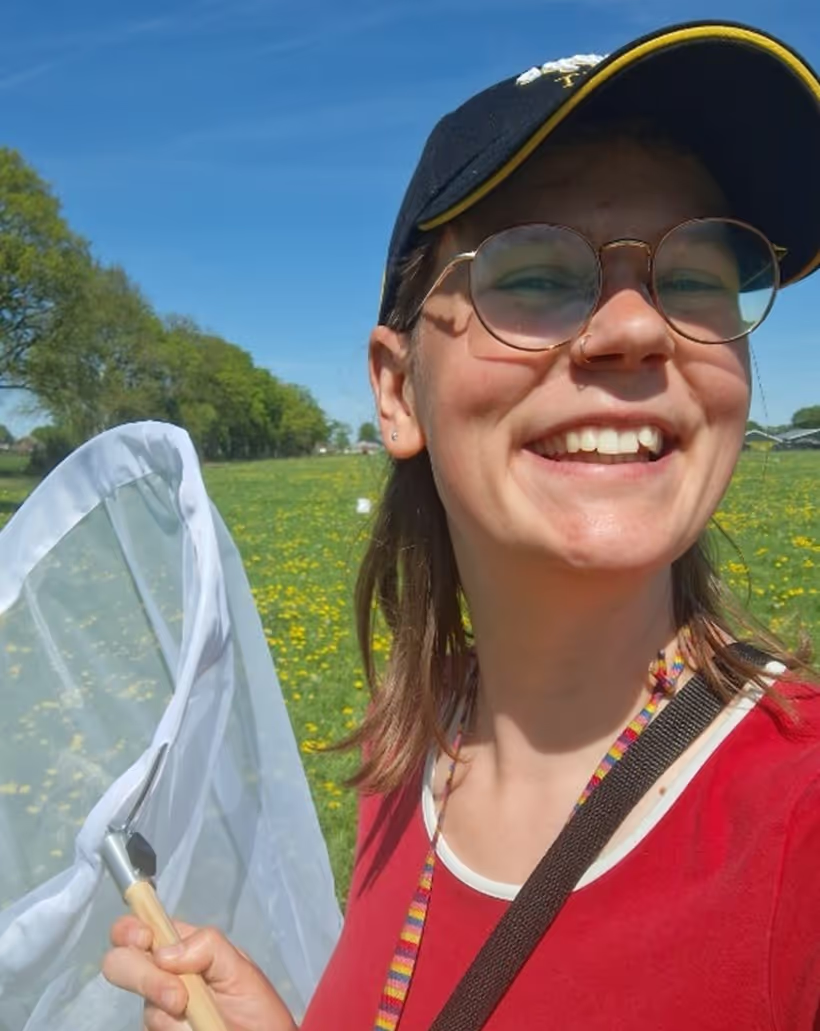
My name is Tessel de Vries and I do research on the above-ground biodiversity in grasslands of dairy farmers. I investigate the effects of herb-rich grassland on the presence and diversity of plants, insects and birds and also how this is influenced by how the farmer manages his or her fields (mowing, grazing, fertilizing). In addition, we also measure the yield of the grassland, so that we get a good idea of how herb-rich grassland is a suitable alternative for both the farmer and nature to the currently common perennial ryegrasslands. In 2025 we will have run a first trial year, in 2026 and 2027 we will collect further data from about 20 dairy farms and then we can hopefully draw the first conclusions!
Sub-project 3: intergration of herb-rich grassland into the dairy farm
My name is Emma Windey and I focus on the social science side of grassland management. Large-scale application of herb-rich grassland management can only exist if it is also applicable in the agricultural sector. To contribute to this, I focus on:
- identifying obstacles and opportunities that are important in the implementation of herb-rich, multifunctional grasslands;
- studying insights that (un)successful case studies can provide to motivate implementation;
- understand how policymakers and the agri-food industry can support agriculture to accelerate the transition;
- the development of transition pathways for dairy farmers.
In 2025, I was working on mapping obstacles and opportunities for the adoption of herb-rich grassland in the Netherlands. I mainly focused on the perspective of the dairy farmers, in order to get a clear picture of their experiences and the decision-making process they go through when deciding whether or not to use herb-rich grassland. This lays a good foundation for my follow-up research.
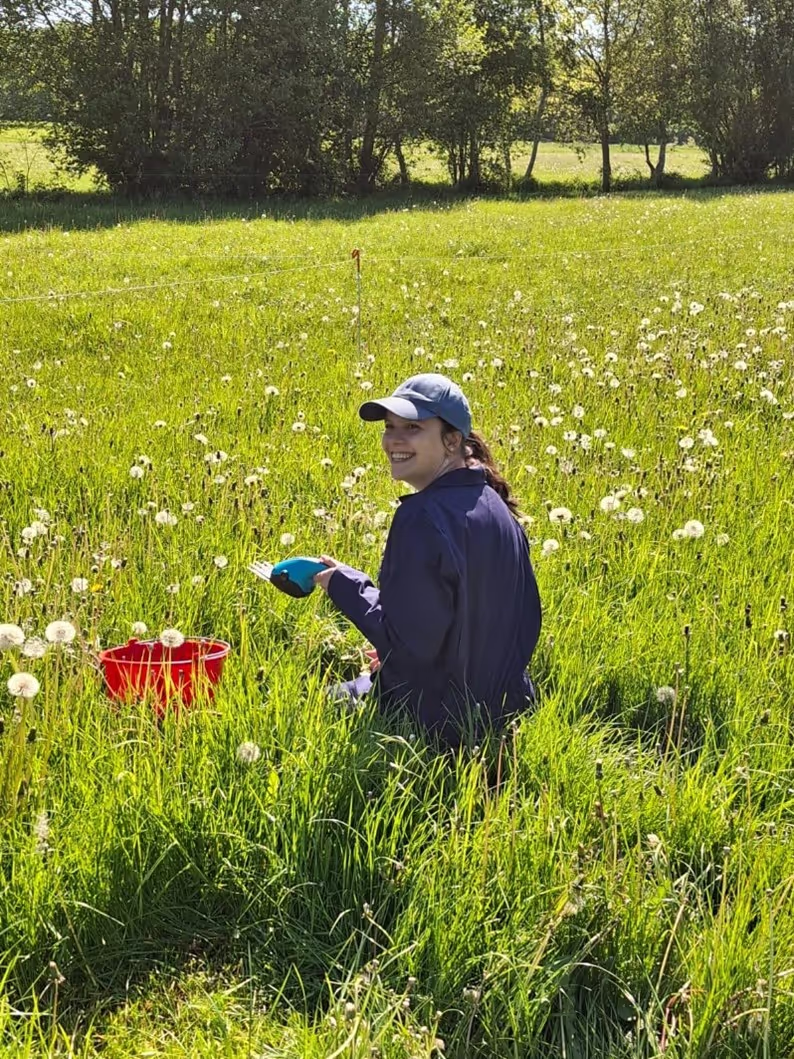
Much of my work was still done behind my desk in 2025, but luckily I was also allowed to go on fieldwork with Noa and Tessel for a few days!
Climate and nature in forests (WP2)
Main Objectives
The future of forests in the Netherlands is ecologically and politically uncertain. It remains unknown how the climate in the Netherlands will change, which poses questions on how forest management and policies can anticipate the future. Importantly, changing climatological conditions may require a change in species composition, yet it remains unknown which native or exotic species are suitable in the future ecosystem. Furthermore, forests are expected to mitigate climate change through carbon capture, provide high-quality wood for a bio-based economy, contribute to biodiversity conservation, and provide sufficient recreational space for urban populations. Navigating these different social demands is especially complex in the context of climate uncertainty.
The aim of this work package is to advance our understanding of how Dutch forest landscapes can become climate resilient, while maintaining biodiversity and multiple societal functions. We will approach forests from different disciplinary perspectives and across spatial scales, integrating ecological knowledge and governance. Climate resilience, including resilience to drought and other climate extremes, will be studied at the level of tree species, provenances, forest stands and heterogeneous landscape mosaics. The work package will further assess the effectiveness of forest and landscape management strategies and identify robust, context-specific measures to support climate-smart forestry. Finally, social, political and institutional obstacles and conditions for policy change will be identified, aiming to explore how forest policy can be adapted to uncertain climate futures.
Team
Team leads: Frank Sterck1, Marjanke Hoogstra-Klein1, Wietske Bijker2, Jelle Behagel1
Researchers: Roald Nooijens1, Maaike Breedveld2, Marleen Vos1, Alex Neidermeier1
Involved partners: Ute Sass-Klaassen3, Paul Copini1, Monique Weemstra1, Georg Winkel1, Tomas Groen2, Louise Willemen2, Staatsbosbeheer, VBNE, Natuurmonumenten, BIJ12
Organisations: 1. Wageningen University, 2. University of Twente, 3. Van Hall Larenstein
Subproject 1: Climate resilience and diversity of forests
Researcher: Marleen Vos, post-doc
Climate change is increasingly affecting forest ecosystems, influencing tree growth, survival, and overall biodiversity. Rising temperatures and the growing frequency of extreme weather events—such as hot droughts and late spring frosts—pose major challenges to forest resilience.
In this project, we assess whether native broadleaved tree species remain suitable under these changing conditions. We focus on 14 species and evaluate their responses to climate extremes across different soil types. Because tree responses can vary strongly with soil conditions, we sample trees growing on sandy, loamy, and clay-rich soils in three distinct regions of the Netherlands. Using dendrochronological analyses, we reconstruct growth responses to extreme events and assess the capacity of trees to recover. These insights allow us to develop practical guidelines for the use of native broadleaved species, tailored to specific soil conditions.
In addition to native species, we explore the potential of non-native tree species as part of an assisted migration strategy. We study 16 species (eight broadleaved and eight coniferous) that are either valuable for timber production or closely related to native species (e.g. Fagus orientalis). Using the same dendrochronological approach, we evaluate their productivity and sensitivity to climate variability.
Finally, we investigate long-term changes in soil biodiversity by resampling historic experimental sites. This allows us to assess trends in biodiversity over time. While the combined effects of climate change and nitrogen deposition cannot be fully disentangled within the scope of this study, the data provide valuable insights into how soil biodiversity has developed under changing environmental conditions.
Subproject 2: Forest management practices for the future
Researcher: Alex Neidermeier, post-doc
As part of the COMBINED project, I study how Dutch forest owners and managers are responding to climate change and what support is needed to strengthen the resilience of forests in the future. My work combines stakeholder engagement with spatial analysis to understand where climate-smart forest management measures are being applied, how effective they are perceived to be, and what factors influence their implementation.
Through surveys, field-based interviews, and participatory scenario workshops, I work together with practitioners to explore future forest management options and identify strategies that can support biodiversity, climate resilience, and ecosystem services under changing environmental conditions. The results will contribute to practical recommendations for forest management and policy in the Netherlands.
Subproject 3: Upscaling drought resilience and robustness of biodiversity to landscape level
Researcher: Maaike Breedveld, PhD candidate
My research focuses on drought resilience at a landscape level. The Dutch landscape consists of a mosaic of grasslands and forests. I want to understand how the characteristics of these mosaics influence vegetation responses to droughts. Do some grasslands and forests stay greener than others? Does their size or proximity to each other matter? I will also investigate how drought resilience can be monitored. And how resilient is our current landscape against future droughts? To study this I will use satellite images to track the health of vegetation over large areas and identify spatial patterns. I will combine this with weather data and field measurements. With my research I hope to contribute to more future-proof resilient landscapes in the Netherlands.
Subproject 4: Future forest policy pathways
Reseacher: Roald Nooijens, PhD candidate
Forest policies have a two-way relationship with futures and future uncertainty. On the one hand, policies attempt to realize a politically desired future, while trying to avoid undesirable futures. To do so, policies anticipate expectations and aim to reduce uncertainty by formulating tangible visions and manageable targets. On the other hand, representation and imaginations of the future influence which future is embedded in forest policies. For instance, climate models change future expectation, therefore how the future is anticipated through policy aims. Furthermore, policies attempt to navigate different social visions on the future.
The aim of my research is to explore how future forest policy pathways in the Netherlands can be responsive to the uncertain of climate change and the variability and instability of social and political demands placed the forests’ future. My PhD project exist of three parts. First, I will analyze how the role of the future in forest policies has changed. Especially focusing on the social and political conditions under which the imagination and representation of the future have changed. Second, I will go into current perceptions of and desires for the future in the context of climate uncertainty. Importantly, going into the gap between experienced futures and policy futures. Third, I will explore possible policy transformations that respond to identified institutional and social barriers.
Climate and nature in urban areas (WP3)
Main Objectives
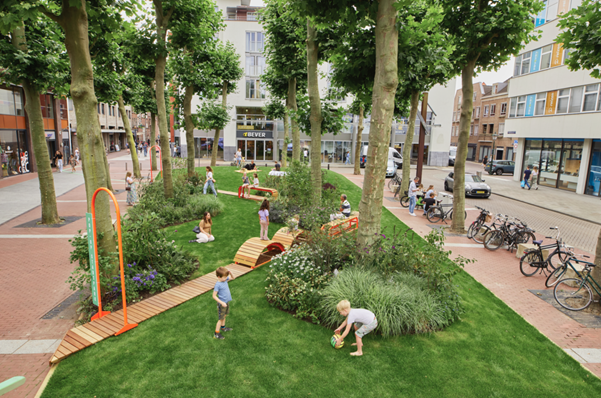
The work on urban areas (Work Package 3) of the COMBINED project aims to strengthen the foundations for future biodiversity and climate resilience in urban landscapes. It focuses on understanding how climate change and other urban pressures affect species and ecological communities, and how urban green infrastructure, such as trees, parks, green roofs, and corridors, can be designed to enhance ecological stability while supporting climate adaptation.
A key objective is to identify which species and ecological configurations contribute most effectively to resilient urban systems under different climate scenarios. By developing methods to link biodiversity dynamics with climate resilience, the project seeks to guide the evaluation and design of climate-resilient and biodiverse urban environments. It further aims to strengthen the integration of urban green into climate adaptation and biodiversity policies, demonstrating how ecological and social benefits can be combined in practice.
Finally, WP3 seeks to enable transformative and equitable change by addressing social, cultural, and governance barriers that limit implementation. Through collaboration with municipalities, researchers, and citizens, it will co-create pathways, action plans, and monitoring frameworks that support just, scalable, and evidence-based transitions toward climate-resilient, biodiverse, and sustainable urban landscapes.
Activities/Methods
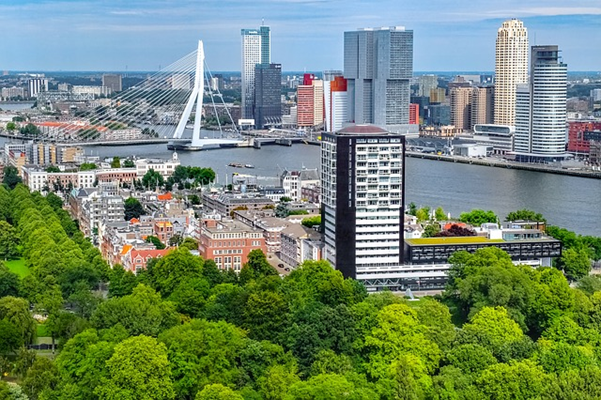
Using a multidisciplinary, demand-driven approach, the work package explores the interactions between climate and biodiversity in urban areas, focusing on the development and functioning of urban green, from policy and planning processes to the ecological performance of green spaces and their interaction with the urban environment. Methods include interviews, participatory workshops, fieldwork, remote sensing, regression and ecological modeling, and literature synthesis. The research is adaptive, responding to the needs and questions of municipal and societal partners. The research is primarily done using Rotterdam, The Hague, Groningen, Haarlem, and the Twente region as cases. Insights are co-developed with municipalities and stakeholders to generate knowledge and strategies that are just, practical, and scalable, supporting the transition toward biodiverse and climate-resilient cities.
Contribution to COMBINED
Within the COMBINED project, this work package contributes to translating integrated research findings from urban landscapes into practical and accessible resources for policy, planning, and management. It will deliver governance-ready decision-support tools, scenario-based guidance, and structured communication materials that help embed biodiversity and climate resilience into everyday urban and regional planning. Outputs will include practitioner briefs, training modules, and co-creation workshops that connect science, governance, and local implementation. By fostering collaboration and knowledge exchange among researchers, municipalities, and stakeholders, this work package ensures that COMBINED’s scientific insights are effectively applied in practice, supporting adaptive, equitable, and future-proof landscape management across the Netherlands.
Team
Team leads: Roy Remme1, Paulo van Breugel2, Steven McGreevy3
Team members: Joeri Morpurgo12, Jill den Boer1, Alexander van Oudenhoven1, Margje Voeten2, Catherine Koekoek3, Charné Theron4, Floris Boogaard4, Sterre Koops4, Berry van der Hoorn5, William Voorberg6, Paul van der Donk2, Esther Turnhout3, Clara Veerkamp7, Peter van Bodegom1, Thomas Groen3, Louise Willemen3, Sharlene Gomes1,
Organisations: 1. Leiden University, 2. HAS green academy, 3. University of Twente, 4. Hanze Hogeschool, 5. InHolland, 6. Naturalis, 7. Planbureau voor de leefomgeving, 8. Gemeente Den Haag, 9. Gemeente Groningen, 10. Natuurmonumenten
Climate and nature across landscapes (WP4)
Our activities in the three landscapes from the basis of cross- landscape lessons learnt. We harmonize our activities to allow for synthesis.
In COMBINED the same research questions are addressed across ecosystems in grasslands, forest and urban nature. Therefore, COMBINED forests an environment where ecosystem specialists interact with each other to learn from each other (exchange of skills, knowledge, methods and techniques between ecosystems) and harmonize their approaches (cross-cutting methodological approaches, KPI’s and decision support tools). Consortium partners are involved in inter-disciplinary (and in most cases, trans-disciplinary) research within their landscapes, as well as in more specialized, thematic (mono-disciplinary) research with similar experts across landscapes.
These collaborations and harmonization lay the foundation for synthesis across ecosystems and landscapes. Our synthesis activities focus on creating outputs with long-term, cross-ecosystem relevance. Their definitive form will be co-designed together with the relevant stakeholders during the project. Specifically, we will:
· Identify key lessons learned and best practices across landscapes during dedicated cross-ecosystem workshops during the annual NWA symposia. This will include both interim lessons as well as final conclusions, which will be tailored to support decision makers in the design and evaluation of the spatial planning.
· Co-develop integrated guidelines to support landscape design and management with the Ministry, provinces, and selected landowners in which ecosystem management is integrated at landscape level.
· Develop education materials that synthesize our project findings for additional target audiences, along with the other landscape-level products.
· Initiate and facilitate connections between researchers, practitioners and stakeholders across landscapes for continued knowledge exchange and co-learning in a science-policy-practice platform, starting with the stakeholders in our consortium and expanding from there. Forms of knowledge exchange are to be co-designed with stakeholders but may include a forum, Loket, professional articles and presentations, field visits, and workshops.
· Write a scientific article on the new state-of the art on transdisciplinary cross-ecosystem interactions between nature, climate and society and translate this article into a professional publication for policymakers with clear action perspectives, to be published online, and in an applied journals.
Team:
Louise Willemen (UT), Merel Soons (UU), Jelle Behagel (WU), Margje Voeten (HAS) with all consortium members.